Psychological abuse is the most common form of intimate partner violence.
Black et al., 2011
New Book · September 17, 2026
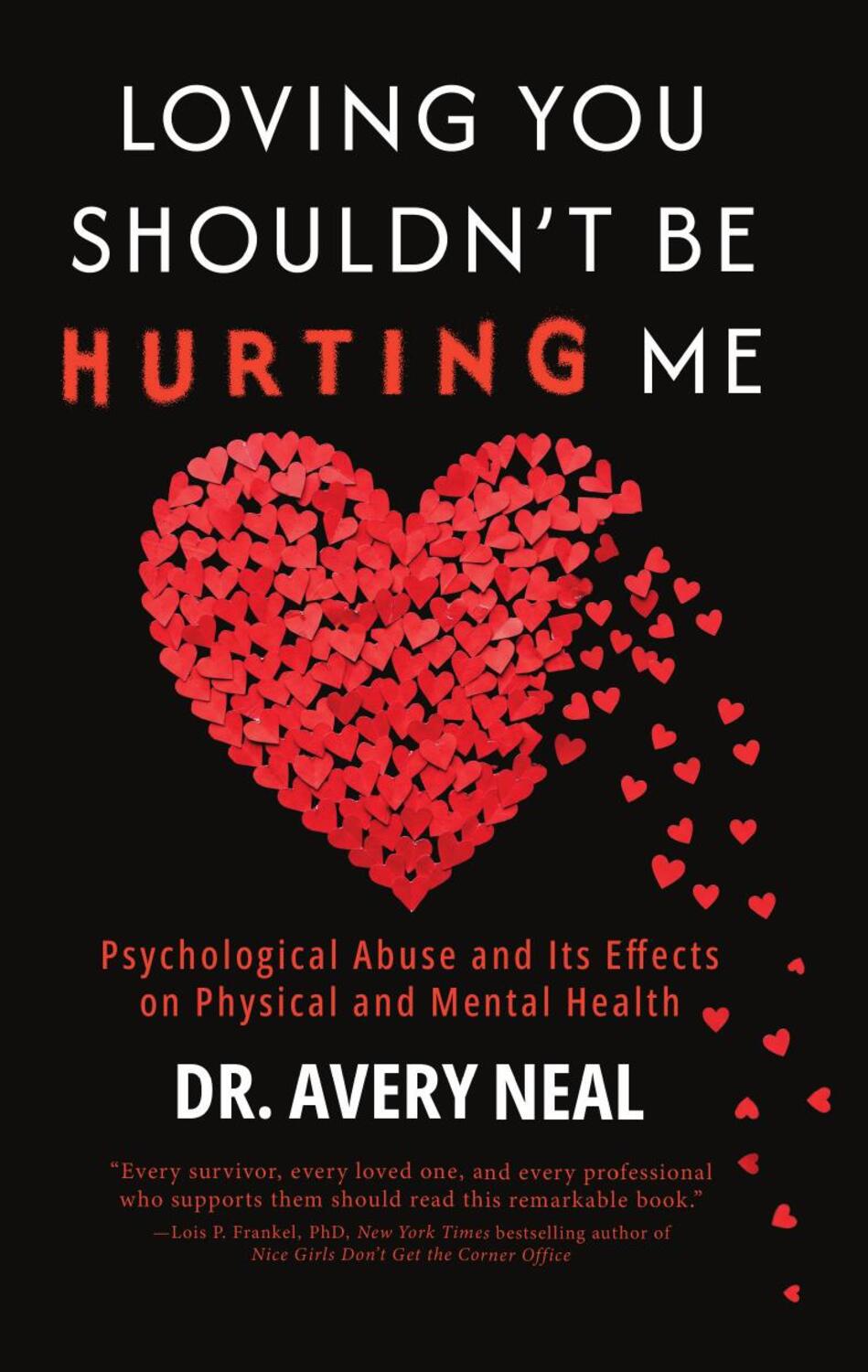
Psychological Abuse and Its Effects on Physical and Mental Health. A groundbreaking investigation offering a definitive plan for recognizing and overcoming intimate partner violence and the breadth of its impact.
From international author, researcher and psychotherapist Dr. Avery Neal.
Foreword by Dr. Alex Howard.
Also available through Barnes & Noble and Penguin Random House.
Praise for the book
"Subtle abuse is real, and it has long term effects. This book will help you heal."
This is a compassionate, informed, crucially important book to help women recognize and heal from the very damaging and often unrecognized pattern of subtle abuse. I bought this for a friend who is leaving a toxic marriage but ended up being able to apply this to an abusive work situation of my own.
Gas lighting, minimizing, controlling behavior can destroy self-esteem and incapacitate people from moving forward. Dr. Neal presents the best process I found to identify and rebuild from this type of relationship and this help comes not a moment too soon.
"Help for victims of psychological abuse"
Dr Neal has written a wonderful reference for clinicians or anyone who needs guidance regarding psychological abuse. Her expertise shines through on every page.
"Effects of phychological abuse, the physical as well as emotional."
I just finished Dr.. Neal's second book on psychological abuse and wanted to write about the gift that this book and Dr. Neal are to those of us who have suffered from this kind of abuse. If I could give it more than 5 stars, I would!
We don't tend to think of someone as being a victim of abuse when there's no physical harm, but the emotional and physical toll that covert abuse exacts has equally shocking and harmful effects on victims and their families. Just because the effects are hidden as bruises might be under our clothing, that doesn't mean that they are not there. Few of us have never suffered from this sort of mistreatment, either currently or in the past, and it exacts shocking emotional, psychological and physical tolls on our health and well being.
This is an extremely well researched book with mountains of evidence to support her work. Dr. Neal has been in the business of caring for hundreds of victims of this kind of abuse for many years, and she has seen, first hand, the pain and devastation that psychological mistreatment inflicts on its victims.
This is a "must read" for anyone who has witnessed or suffered from this insidious scourge on humanity. Well researched and thoughtful, rare is the person who would not benefit from from understanding this very real social and personal catastrophe.
For either yourself, or a loved one, buy this book, read it, and pass it along to those you care about.
The research
Psychological abuse is the most common form of intimate partner violence.
Black et al., 2011
Half of Americans report experiencing psychological abuse by a partner during their lifetime.
CDC, 2010
women in the U.S. have experienced psychological aggression by an intimate partner.
Black et al., 2011
women, roughly 840 million globally, have experienced partner or sexual violence in their lifetime.
WHO, 2023
The effects of psychological abuse are just as detrimental as the effects of physical abuse.
Karakurt and Silver, 2013
Understanding it
Psychological abuse is a repeated pattern of behavior, including criticism, manipulation, isolation, intimidation, and control, used to erode another person's sense of reality, worth, and independence. It leaves no bruises, which is exactly why it goes unnamed for so long, and why research shows its effects on the mind and body can be as damaging as physical violence.
It is also called emotional abuse or coercive control, and it underpins every other form of abuse. Naming the pattern is the first step toward recovering from it.
About the book
"Dr. Neal leads the way academically, not simply synthesizing what is already understood, but contributing to it and moving it forward. I could not be more glad that you have Dr. Neal as your guide."
Anyone trapped in an unhealthy, toxic, or controlling relationship will find a clear path forward in this book, whether the relationship is ongoing, long over, or rooted in childhood trauma.
Those who have experienced physical or mental health symptoms as a result of chronic manipulation will find immediate validation and a comprehensive roadmap on how to truly heal the mind, body, and spirit.
Clinical research indicates that subtle psychological abuse inflicts the most devastating damage. This book addresses that global crisis head-on, and while women are most often affected, it explicitly addresses how men and children are impacted too.
"Every survivor, every loved one, and every professional who supports them should read this remarkable book."
Inside the book
Order bonuses
Email your proof of purchase to info@averyneal.com to claim your bonuses. Copies you gift to a friend or a client all count toward your total.
A focused, printable resource to help you name what is happening: the patterns, the tactics, and the language for them.
Get Dr. Neal's Recognizing Psychological Abuse course, self-paced, practical, and yours to keep.
Complete access to Dr. Neal's full course library, plus every reader resource above.
For organizations
Through partnerships with hospitals, health systems, and health plans, Dr. Neal brings assessment tools, training, and psychoeducational programs directly to patients, so recognizing psychological abuse and supporting recovery become part of care.
A private 90-minute session for your leadership or clinical team on recognizing and responding to psychological abuse.
A virtual training for your whole organization, plus access to Dr. Neal's courses for your staff.
A custom-printed edition of the book with a foreword and cover branded for your organization, plus an on-site keynote.

About the author
Dr. Avery Neal is an internationally published author, researcher, and psychotherapist. She is the leading expert on psychological abuse and its effects on women's mental and physical health.
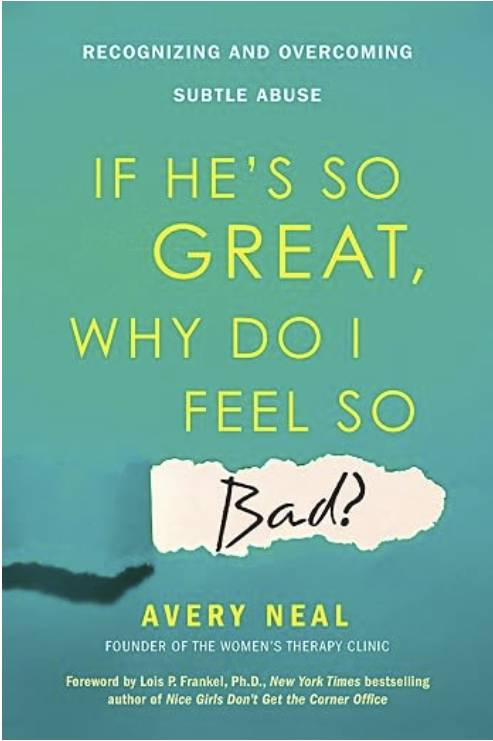
Her first book, If He's So Great, Why Do I Feel So Bad?, gave readers the language to recognize subtle abuse and has been published in twelve languages. More than 20,000 people worldwide have taken her courses, which are also used by clinicians, universities, and organizations. Her writing and interviews have appeared on Oprah.com and in Counseling Today and Best Self Magazine, and she has spoken at conferences alongside some of the world's leading experts in psychology.
Her second book, Loving You Shouldn't Be Hurting Me, deepens that work. Drawing on current research and findings from her clinical practice, it examines how psychological abuse harms the nervous system, the body, and the mind. It also introduces the Neal Method and her CLEAR framework for recovery.
Her work now extends beyond individual clinical practice to address psychological abuse across the broader healthcare system. Dr. Neal is advancing the clinical and medical recognition of psychological abuse, a form of harm that remains largely unassessed and unidentified in healthcare settings. She has developed assessment and identification tools where none previously existed and is building the practical resources frontline clinicians need to recognize psychological abuse in their patients.
Through partnerships with hospitals, health systems, and health plans, she is bringing her psychoeducational programs directly to patients so that recognizing psychological abuse and supporting recovery become part of care.
From readers around the world
If He's So Great, Why Do I Feel So Bad?: Recognizing and Overcoming Subtle Abuse is the book that introduced readers to Dr. Neal's compassionate, research-backed approach to recognizing subtle abuse, and it is the perfect companion to her new release.
“Until recently, I was completely in denial of my abusive relationship. Every relationship has its unique markers and characteristics, and sadly many books on abuse seem to only categorize. This one helped me name what was happening.”
“This book gave me the language I needed to understand my experience. I only wish I had found it sooner.”
“Dr. Neal writes with the perfect balance of clinical insight and genuine compassion. For the first time, I did not feel alone in what I was going through.”
“I have recommended this book to every friend who has ever questioned their relationship. It is clear, validating, and genuinely life-changing.”
The courses
Dr. Neal's courses are practical, research-informed, and yours to keep. Each one opens in a new tab so you can explore without leaving this page.
Recognizing Psychological Abuse: The Subtle Signs That Most People Miss
Learn how to identify the red flags most people overlook. This self-paced course helps you name confusing behavior, rebuild confidence in your perceptions, and decide what is healthy and what is not.
Learn moreTrauma Anxiety Recovery: Heal Your Nervous System After Abuse
Designed for anyone whose nervous system is still recovering from a stressful relationship. You will learn practical tools to calm rumination, regulate anxiety, and restore a sense of safety in your body.
Learn moreHealing After Psychological Abuse: Rebuild Your Confidence and Identity
A step-by-step path to reclaiming who you are after psychological abuse. Rebuild self-trust, restore your identity, and create healthier relationships with yourself and others.
Learn morePress & media
Dr. Avery Neal is available for interviews, expert commentary, panels, and keynotes on psychological abuse, coercive control, and trauma recovery. For interview requests, review copies, or research citations, email info@averyneal.com.
Suggested interview topics: why psychological abuse is the most common form of intimate partner violence, what chronic manipulation does to the nervous system, how clinicians miss the subtle signs, and the Neal Method and CLEAR framework for recovery.
Common questions
Psychological abuse is a pattern of behavior used to control, isolate, frighten, or demean a partner. It includes gaslighting, intimidation, humiliation, monitoring, and controlling money, contact with family, or daily decisions. Unlike a single argument, it is a sustained pattern that leaves a person doubting their own perceptions and increasingly dependent on the abuser.
Common signs include constant criticism or name-calling, gaslighting that makes you question your memory, monitoring your phone or whereabouts, isolating you from friends and family, withdrawing affection as punishment, and feeling anxious, exhausted, or unwell without a clear reason. The clearest signal is the pattern: you are repeatedly left smaller, more doubtful, and more dependent.
Read the full guide to the signsEmotional abuse is a repeated pattern of behavior, including criticism, humiliation, blame, contempt, threats, silence, or control, that erodes another person's sense of worth, safety, and confidence in their own perception. It is defined by the pattern and its effect over time, not by any single argument.
Read the full explainerCoercive control is a sustained pattern of intimidation, isolation, monitoring, and regulation of everyday life: money, movement, time, and contact with other people. It is psychological abuse organized toward control, and in several countries it is a criminal offense with no physical violence required.
See the signs of coercive controlOne example is gaslighting: a partner denies things they said or did ('That never happened, you're remembering it wrong') until you no longer trust your own judgment. Other examples include silent treatment used as punishment, threats to take the children or cut off money, and public mockery followed by 'I was only joking.'
The terms overlap and are often used interchangeably. Emotional abuse usually refers to attacks on your feelings: criticism, humiliation, rejection. Psychological abuse is the broader clinical term: it targets your mind and perception as well, through gaslighting, coercion, intimidation, isolation, and financial or reproductive control.
See the full comparisonIt is the most common form of intimate partner violence. About half of Americans report experiencing it from a partner in their lifetime, and 57.6 million women in the U.S. have experienced psychological aggression from an intimate partner.
Yes. Chronic psychological abuse keeps the nervous system in a prolonged stress response, which research links to anxiety, depression, PTSD, sleep disruption, chronic pain, autoimmune flares, and cardiovascular strain.
Look at the pattern rather than any single incident: does the behavior repeatedly leave you smaller, more doubtful, and more dependent? The book walks through the characteristics of abusive dynamics so you can name them clearly.
Try the 10-question self-checkYes. Women are most often affected, but the book explicitly addresses how men and children experience psychological abuse and how its effects carry forward into other health related and relationship concerns.
Recovery is possible whether the relationship is ongoing, long over, or rooted in childhood. Dr. Neal's Neal Method and CLEAR framework offer a step-by-step path through clarity, liberation, empowerment, autonomy, and resilience.
Read the recovery guideWho this book is for
If you are questioning whether what you are living is abuse, this book gives you language, validation, and a step-by-step path forward.
A practical framework for naming psychological abuse, supporting the nervous system, and guiding recovery with clients.
For hospitals, behavioral health centers, and community organizations supporting people affected by psychological abuse and coercive control.
In short
Loving You Shouldn't Be Hurting Me: Psychological Abuse and Its Effects on Physical and Mental Health is a book by Dr. Avery Neal, published September 17, 2026, with a foreword by Dr. Alex Howard. It explains what psychological abuse is, how to recognize subtle abuse in a relationship, how it affects the nervous system and the body, and how to recover using the Neal Method and the CLEAR framework. It is available from Amazon, Barnes & Noble and Penguin Random House.
Dr. Avery Neal is an internationally published author, researcher and psychotherapist, and a leading expert on psychological abuse and its effects on women's mental and physical health. Her first book, If He's So Great, Why Do I Feel So Bad?, has been published in twelve languages, and more than 20,000 people have taken her courses. For press inquiries, interviews and bulk orders, contact info@averyneal.com.
Launching September 17, 2026
Available September 17, 2026. Help this book reach the people still trying to name what is happening to them.